Ep 196: Pasteles & Veterans – Surviving Holidays After Service ft Daniel, Daquane, Marcos, & Rodney
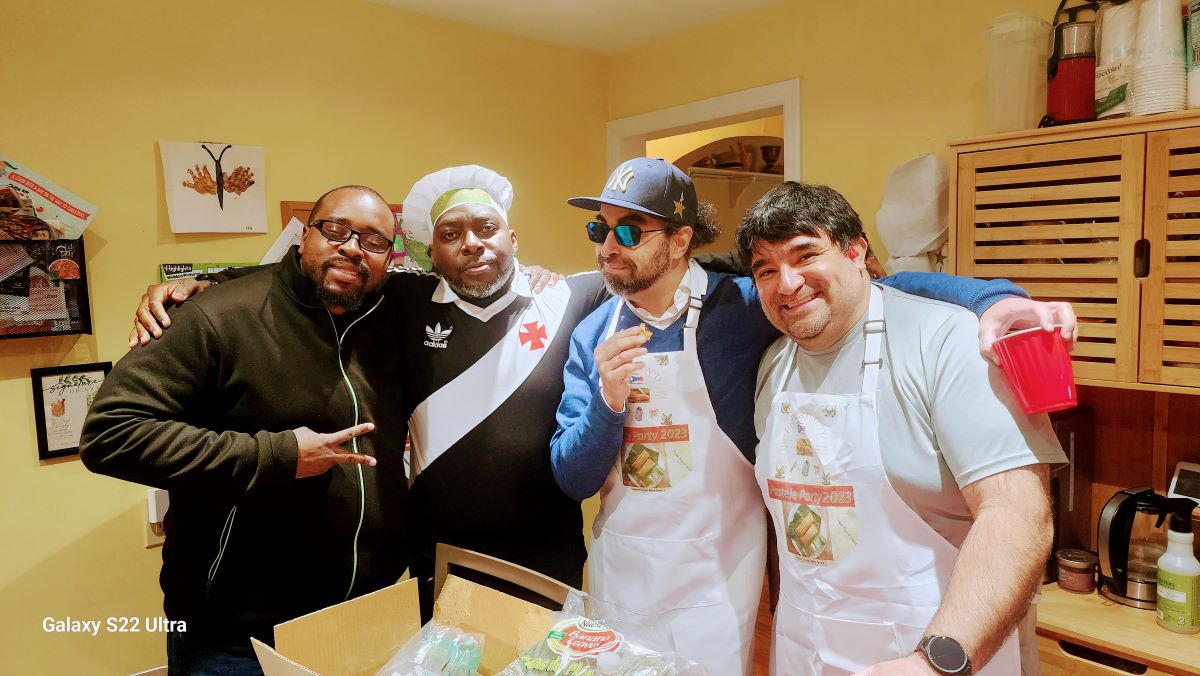
From hilarious stories about holiday food fails in war zones to candid admissions about homelessness and depression, these veterans open up about what it means to find connection, hope, and healing during the toughest seasons. Discover how pasteles and coquito become more than food as we continue the Bad Bunny celebration—they’re reminders of family, survival, and finding your people.
Whether you’re curious about Puerto Rican holiday traditions, want to hear veterans’ real stories, or need a reminder of what community feels like when times get rough, this episode is not to be missed.


Note: This episode includes discussion of suicide and drug use. If you’re experiencing suicidal thoughts or self-harm urges, please reach out to the Suicide and Crisis Lifeline at 988, available 24/7.
Fresh off Benito's (Bad Bunny) epic Super Bowl win, I'm thrilled to share a special interview from a Pasteles Party taking us to Puerto Rico. For those new here, Pasteles is an event I've mentioned before, and the stars finally aligned for me to attend (again) last year. With some old friends I hadn't seen in ages, it was the perfect chance to whip out the microphone and capture our conversations amidst meal prep, kids running around, drinks, and hugs.
So, what happens when you gather five military vets in a chilly New Jersey garage during a Pasteles Party? After some coquito, you get raw stories, laughter, and pure emotion, plus a surprise cameo. It was an impromptu chat—guided by platano and coquito. Enjoy the conversation! Funny enough, we thought it was cold that day, but 2026 has proved to be even chillier. This powerful roundtable goes far deeper than Puerto Rican culinary traditions — listeners are invited into raw conversations about military service, the struggle for mental health after discharge, and the strength of community.
There shall be Pasteles episodes in 2026!
We’d love to hear your feedback, whether written or audio, at www.whitelabelamerican.com.
Raphael Harry [00:00:00]:
All right, all right. Welcome to a brand new episode of White Label American. It's a special episode, extra special. And if you're not giving us money, this is why you should give us money. Because this is. You can't find this anywhere. You can't find this whole of America, whole world, even go to Joe Rogan, the biggest podcaster in the world. You can't find this.
Raphael Harry [00:00:21]:
He need to pay us $200 million. But that's aside. Support this podcast. Give us gold. Give us dollars. Give us euros. Give us pound, British pound. Stellies.
Raphael Harry [00:00:33]:
Yeah, we'll take it. Swiss francs. We'll take two. But if you bring any currency outside of that, fuck you, we ain't gonna take that. All right, you're racist. So give us five stars. If you give anything less than five stars, you're also a racist. So don't do that.
Raphael Harry [00:00:51]:
Be a good person, all right? And you can make heaven. All right, so with that being said, I have a great panel with me today. It's a special venue. Sorry I can't give you a video. I forgot to bring my webcam with me. Things happen, you know, when you're an indie podcaster, life happens. It's too cold out on the streets. But you'll find out why and where we are today in a few seconds.
Raphael Harry [00:01:12]:
With that being said, I'm your host, the ronin Rafa, AKA Raphael, and the one and only host of White Label American. Until I find a brand superb person who can be my backup co host. But with that being said, let's not waste time. Let's dive in. Is the holiday season. That's the day we are recording on 6th December, 2025, close to the end of the year. You know, let's just dive in. And sitting right next to me is an outstanding individual, illustrious guest, he's been on the podcast before and great host for today's episode.
Raphael Harry [00:01:50]:
And please tell us who you are.
Daniel Perez [00:01:53]:
How you guys doing? My name is Daniel Perez and we are here today to at my home where we are celebrating a pasteles party which is a celebration of Puerto Rican culture where we come together, we share drinks, we share food, a little bit of blood sometimes and you know, have a great time and celebrate the. Celebrate the end of another wonderful year.
Raphael Harry [00:02:16]:
Fantastic, fantastic. And you've heard some other voices in the background, so let's capture who they are and yeah, just find out who they are. So beginning from. Let's go to the right.
Marcos Dominguez [00:02:31]:
Hello, my name is Marcos Dominguez, I'm a U.S. army veteran. I am possibly, maybe partially a comic relief kind of person, but not the very best. But we'll be here for this. We'll see what happens.
Raphael Harry [00:02:43]:
Thank you, Marcos. Also first timer on the podcast, and thank you for giving us your time. And let's find out who the next person is.
Daquan Mays [00:02:53]:
Hey, what's good, y'?
Daniel Perez [00:02:54]:
All?
Daquan Mays [00:02:54]:
My name is Daquan Mays. I am a Army veteran, New York City resident, and I love her cheesecake.
Raphael Harry [00:03:02]:
Can't go wrong with cheesecake. Or is it just the cake? We'll find out. So, yeah. All right, last but not least, he was here on time. Is he the sexiest guest? We'll find out. All right, introduce yourself, please, and tell us.
Marcos Dominguez [00:03:21]:
Don't break anything.
Raphael Harry [00:03:22]:
Yeah, don't break anything, man. Come on.
Rodney Lugo [00:03:25]:
Yes, this is Rodney Lugo, army and army reserve veteran, and somebody's coming through the door now.
Raphael Harry [00:03:33]:
All right, all right, all right.
Marcos Dominguez [00:03:35]:
Yeah, yeah.
Raphael Harry [00:03:38]:
But, yeah, we're good. We are good. We are good. We're good, we're good. So we are celebrating Pastelis, and this is an event that I got introduced to towards the. Just before, right before the pandemic. I'd never experienced this, but it reminded me of making Moimoin, for those of you of Nigerian heritage or background. And it's.
Raphael Harry [00:04:04]:
It was just beautiful. And, you know, thanks to Daniel Perez for introducing me to this. And I was like, man, this is just beautiful being around family, being around culture. And Daniel's dad is somebody who. Who I have to get on the podcast because, man, apart from making some awesome coquito, you know, he. He was just accepting when. When I showed up. So, yeah, it's something that I never forgot.
Raphael Harry [00:04:33]:
And my kid was around 2 years old then, and we, we just, We. We've shared a lot of bonds, myself and Danielle, but it's just one of the. My favorite memories of being in New York and part of the way I knew New York is my home. So with that being said, we're going to talk about holidays and our time in the military. But before we dive into that, let me see. I decided to cheat a little bit and pull up some of my cheat card questions. Don't worry, you won't see anything on the back. It's all in the front.
Raphael Harry [00:05:10]:
So how did your childhood shape your military experiences when it comes to holiday memories? Do you get the question? How did your childhood shape your military experiences when it comes to holiday experiences? And for the audience, we had tried to record earlier and some fun experiences happened. So, yeah, so, yeah, so I, I twisted the Question that I began with. Yeah, so they weren't expecting this. So now the looks on their faces were like, what? So would like to go first?
Daniel Perez [00:06:06]:
Sure. I mean, it's Daniel Perez here. It feels Perez. Daniel Antonio Perez.
Marcos Dominguez [00:06:17]:
It.
Daniel Perez [00:06:17]:
It kind of hurt a little just because. And we're all here at my home with a lot of my family, and we always had a very boisterous, fun time during holidays. So military holidays felt a little muted to me, which kind of sucked. But, you know, it's something you persevere through, and that's life. But, yeah, it was. They felt different. They felt very different.
Raphael Harry [00:06:40]:
And for the audience, what branch in the service did you serve?
Daniel Perez [00:06:44]:
Usmc.
Raphael Harry [00:06:49]:
Well, you gotta wear my crane. Well, you gotta remember the audience are not, well, military, you know.
Daniel Perez [00:06:57]:
Yeah. Okay. Well, yeah, so it's. It could be a struggle that, you know, sometimes you're. You're away from family and friends and you miss them. And it's.
Raphael Harry [00:07:05]:
I meant usmc.
Daniel Perez [00:07:06]:
Us. Oh, United States Marine Corps.
Raphael Harry [00:07:08]:
Okay. Well, they're also known as people who sometimes eat crayons. Allegedly.
Daniel Perez [00:07:19]:
The rest of y' all can't handle the crayons. That's all.
Marcos Dominguez [00:07:26]:
If the Marine does not tell you they have a favorite flavor, they're a little bit too rough for their own good. They're not fun. They want to beat you up right away.
Raphael Harry [00:07:39]:
So who else wants to go? Sure.
Daquan Mays [00:07:43]:
All right. So in my. In my spec of things, when it came to. When it came to celebrating the holidays in the military, there was a sense of brotherhood that I didn't experience outside in the civilian world. A lot of times my family has gone on to do different things, and it's really rare times that we got together versus within the military. You're surrounded by X amount of people at any given time, and a lot of us sometimes don't go home to our families. So we try to come up with our own holidays and our own special way of celebrating around the holidays. For example, one time I was in Iraq for Thanksgiving, and a lot of us didn't really like the turkey that they gave us, so we decided to, like, throw that out.
Daquan Mays [00:08:30]:
And we went down to a local area, we bought some goat. One of our friends who. From Jamaica, he made us. He made his curry goat. And, you know, we ripped up a whole bunch of MREs, like put some. Put some this and that together with a bunch of chili Mac and etc. And we. And we made what we made to do what it do.
Daquan Mays [00:08:51]:
Had some. Probably one of the best Thanksgivings I had on the side of a mountain. And then it was great. Like, we had a great time. Like, it was great music. The locals came up and celebrated with us, even though they're not really the best. They didn't know Thanksgiving like that. But, like, we had a good time.
Daquan Mays [00:09:07]:
Like, we ate really well. And then the next day we got shot at. So it was a good. So it. Hey.
Marcos Dominguez [00:09:11]:
Hey.
Daquan Mays [00:09:11]:
Overall good time.
Raphael Harry [00:09:13]:
Yeah.
Daniel Perez [00:09:15]:
Got a turkey leg in your mouth.
Raphael Harry [00:09:21]:
So what. What was wrong with the turkey that you didn't like it n the turkey?
Daquan Mays [00:09:26]:
The turkey was too damn dry and it was in it. And somehow this. The cook. The cook that we all. The cook that we all with did not know how to cook the turkey at the time. I'd never seen a turkey well done in my life. It looked like a well done steak. I don't know how you cook turkey well done steak.
Daquan Mays [00:09:42]:
Exactly. The turkey.
Marcos Dominguez [00:09:46]:
Turkey blacker than me. Army standards.
Raphael Harry [00:09:50]:
Look like.
Marcos Dominguez [00:09:51]:
Well done steak. Exactly. White, dark meat, which is still white.
Daquan Mays [00:09:55]:
How you cook a turkey well done.
Rodney Lugo [00:09:58]:
Unlike you. Unlike you. During my time in the holidays, I had a Jamaican cook.
Daquan Mays [00:10:03]:
Oh, okay. Well, excuse me. Yeah, man.
Raphael Harry [00:10:08]:
Yeah, man.
Rodney Lugo [00:10:09]:
So I get like 10, 20 pounds during the holidays. Because she cooks so well, when she needed help with the kitchen, we always that hands like. Yes, indeed, sir.
Daquan Mays [00:10:22]:
Did she look good?
Rodney Lugo [00:10:23]:
No, but she was Jamaican, so we gave her a pass in that respect. But the cooking was excellent. We had the whole Jamaican. She was an older type. You know, I was in my 20s. You know, she was.
Daquan Mays [00:10:38]:
Had a couple.
Rodney Lugo [00:10:39]:
We was in our 20s. She was, you know, she was a sergeant.
Daquan Mays [00:10:42]:
It was like, nah. But the cook was up.
Rodney Lugo [00:10:46]:
You know why? We've been a few for. I have. Okay. She wasn't like that.
Marcos Dominguez [00:10:52]:
What's your problem?
Daquan Mays [00:10:55]:
Are you up out here?
Raphael Harry [00:11:00]:
Well, what he's trying. What he's trying to say. What he's trying to say is that he. He liked them young. He don't like them. Oh, he don't want to be what they call them. A cat man is a cat man. He's not a man who can be taken care of.
Raphael Harry [00:11:26]:
You know, he doesn't like that. No. He don't want a sugar mama, which. I'm sorry, man. You gotta get with the times. Get with the times. You deserve to be taken care of. Not only the VA gotta take care of you.
Raphael Harry [00:11:40]:
You just, man, see, this is why the Air Force keeps winning, man. If it was an Air Force gu. The air Force, an air Force guy wouldn't have had a problem. He would have said, oh, yeah, I get it. Yeah, she beautiful. And he would have, because I have Air Force friends. One of them looking like 50 right now. But he's.
Raphael Harry [00:12:06]:
He's actually way younger than me. I saw his photo yesterday, and I was like, God damn. But he's a kept man. Oh, yeah. Kept. That's the word. Kept man.
Daniel Perez [00:12:14]:
Kept man.
Raphael Harry [00:12:15]:
Kept man. There's nothing wrong with being a kept man. Yeah.
Daquan Mays [00:12:18]:
Yeah, you are definitely a kept man.
Raphael Harry [00:12:21]:
Being a kept man, you deserve to be a kept man. But you know about our life. It's all right, go work hard. Work hard. Navy is work smart, not hard. That's the goal. If you listen to podcast, walk smart, not hard. But some of you don't deserve that.
Raphael Harry [00:12:36]:
So keep donating to the podcast. We get it. Yeah. And let me know, listeners, what your childhood was like. You know, if you serve the military, we appreciate you. Thank you for your service. But, yeah, let us know. We'll let you know.
Raphael Harry [00:12:50]:
But, yeah. Anybody got something new to add about childhood in military?
Marcos Dominguez [00:12:56]:
So my time growing up, before I even joined the service was a very hectic fight. Consumed one bedroom apartment in New York City. So you have two adults, five kids, two of which are still babies. Yeah, the youngest one's seven years younger than me. The one after that is three years younger than her. So it's ten years between me and the baby. So you have the first three that are born. You know, they're still doing ish, kind of trying to figure out life, but at the same time, they're fighting over a little.
Marcos Dominguez [00:13:28]:
Every little thing. So every holiday, a battle of. You do this, that. Whatever you can think of. I'd rather be in a war zone celebrating anything than being back at home. And, yeah, that's. I mean, yes, the turkey was dry, but there were some quiet. Ish times.
Marcos Dominguez [00:13:52]:
Except for when I was in ira Afghanistan, when. No, it was Iraq. Forget. Because I literally went between six months apart between one or the other. So mortars came in and, yeah, dinner had to come with me to the bunker. So mind you, I wasn't infantry. I was just a plain old mechanic. So whenever shit needed to get fixed, I was there.
Marcos Dominguez [00:14:14]:
But in Iraq, I worked at a morgue for six months.
Raphael Harry [00:14:19]:
Yeah.
Marcos Dominguez [00:14:19]:
So I saw the aftermath. So I was. I was. Yeah, I'm good, but.
Daniel Perez [00:14:23]:
Sorry, dude.
Marcos Dominguez [00:14:25]:
Yeah, I've never met a guy.
Daniel Perez [00:14:27]:
Well, that. That explains a lot, though.
Marcos Dominguez [00:14:31]:
I've never met a guy who came.
Daniel Perez [00:14:32]:
Out of more duty normal and. But that's rough.
Marcos Dominguez [00:14:35]:
I tried. I try to be normal. Well, which is why. Okay, that's about that. Valid point. Stop announcing it to everybody, please.
Daniel Perez [00:14:46]:
I like this.
Raphael Harry [00:14:50]:
Happy. I'm happy.
Daniel Perez [00:14:52]:
That's a rough gig. That's a rough gig.
Marcos Dominguez [00:14:55]:
Afghanistan literally was different in reference to being able to deal with the people that I was actually around. They were a lot better. The team and people that I was around, just in general at the small base was more like a family than me being at home. Didn't matter about the food. It was just the people that I was around. Yeah, the holidays to me aren't about the.
Raphael Harry [00:15:17]:
The food.
Marcos Dominguez [00:15:18]:
It's always about the people. I mean, look at who I'm around right now. I'm down around y' all three, four maniacs to begin with, but it's still a fun time. It's more about being around the people that I like and actually don't mind getting my ass handed to me or vice versa, handing it to them. But it's fun.
Raphael Harry [00:15:37]:
It's.
Marcos Dominguez [00:15:38]:
It's a joy.
Daniel Perez [00:15:39]:
Amen.
Marcos Dominguez [00:15:40]:
I mean, everybody's here has dealt with me, so I'm sorry for y', all.
Daniel Perez [00:15:44]:
Whether we like it or not.
Raphael Harry [00:15:48]:
Hey, Rodney, would you like to add something to that? So after you got our service, what was your first holiday like, you know, to you? What? You know.
Marcos Dominguez [00:16:10]:
First holiday when we got out.
Daquan Mays [00:16:12]:
Yeah, I'll go. So my first holiday out, I was actually spending it homeless. And just to give some context to that, when I got out of the military, I didn't know that the army wasn't going to take care of you like I thought I was when I was active. And when I finally got out after serving six years active and two deployments, I thought that, you know, maybe the army would at least take care of me. They will at least help me with a resume, get me something to, like, stabilize myself. And then all I got was an ARCOM or Army accommodation medal for those who don't know, and maybe a couple of. Couple of dollars that my platoon was nice enough to give me. Got a handshake, and next, you know, I was outside of base going, well, I need to figure out life afterwards.
Daquan Mays [00:17:01]:
So my transition was really difficult. It got to the point where I develop a severe pillow and alcohol addiction. And I spent the holidays, like, trying to fight that off and succumbing myself to a severe depression and ultimately attempting to off myself twice during the holidays just because a lot of survivors, guilt and depression, that really got to me over the times, and I didn't realize that I suppressed a lot of that stuff until I got out and my demons was getting the best of me at the time and nearly got the best of me until. Until I finally decided to go get some help and another veteran helped me get back on my feet. And I probably wouldn't be here today if it wasn't for him. So shout out to him wherever he may be at. So, yeah, that was. That was my time spent during the holidays once I got out.
Raphael Harry [00:18:04]:
Yeah. So how did you find a person speaking to you, Daquan? How did you find a person that told you you needed help, and how did you know that you were ready for help? Because I was almost in a similar boat to you after I got out of active duty. But there's one thing I've come to realize in the current mental state that I'm in, that you can't help somebody who's not ready for help until they accept that they want help. So how did you know that you were at that point that you needed help?
Daquan Mays [00:18:49]:
Yeah, so it was at a time where I was just living outside of Atlanta, Georgia, and I was jumping between bando to Bando. For those who don't know, it's an abandoned house where a lot of drug dealers normally sell drugs at. So I got cool with the drug dealer at the time where he allowed me to stay at one of his bandos on the exception that, like, I just watched the drugs and the money for him while he go out and do his thing. There was one. There was one Saturday afternoon. I remember it was really humid. It was hot. I went to commute.
Daquan Mays [00:19:23]:
I went to the community center nearby to go get something to eat because they normally serve like, lunch and breakfast life for. For everybody. So I went there, met this Vietnam veteran slash desert store veteran who. Who got. Who got out after like 20, 25, 30 years of service. And he was doing odd jobs at the time. His name was Earl. Everybody in.
Daquan Mays [00:19:46]:
Everybody in the community center knew him. Like, he was a big husky, like six, five, like you. You couldn't miss him. Like, definitely built like a. Built like he should have been in the NFL after he got out. So I. I remember I sat across from Earl and we just like, kind of just shot some small talk. Found out that we both served just in different times.
Daquan Mays [00:20:07]:
And I guess he realized, like, something in me was off. And he was like, hey, you know, do you need help? And I'm like, it took me a while to just say, yes, I actually need help. Because I think, like, to me, looking back at it, I realized that it was hard for me to just ask people for help in general. I Was so used to being hyper independent at the time, I thought that, like, I can handle whatever was wrong with me. And I didn't realize until somebody pulled me aside and be like, hey, you are going down a really downward spiral. And you, you really, you really messing up out here. And you need to like, kind of step back and realize that, like, hey, you mess it up. And it wasn't until Earl like kind of like pulled me aside like one, one night that I was just hanging out with him and he was like, hey, hey, brother.
Daquan Mays [00:20:55]:
Like you, you need help and I'm willing to help you, but you need to realize that you need to help in order for me to help you. And it didn't. It took me until after my second attempt at suicide where I realized that I needed to help. I came back to the community center later on that summer, towards the end of the fall season. And I remember I ran into Earl that afternoon and he was just helping out, like, passing food. And I was like, hey, I can, I could really use your help. I, I don't, I'm kind of at my wits and I don't know what to do at this point. I, I thought I had to handle, but I didn't.
Daquan Mays [00:21:35]:
And he was like, okay, cool, so, you know, come over, come over after this and I'll help you out. So from there, I lived with Earl for a couple of months. He put me in this like one, one shack. He had like a three bedroom house. His kids already moved out and moved on with life. So like, I stayed in one, his eldest son's room at the time. And you know, I went with him to like, go do some odd jobs. We went down to the VA in Atlanta, like for me to just like, eventually, like, we myself offer like pills and like severely cut back my alcohol addition.
Daquan Mays [00:22:08]:
I would say it took me probably about a year or so to like finally kick the bucket, especially with the pills thing, because that was like the thing I used to do the most morning alcohol. And on top of that was also smoking. So it took me probably about a year to 2 years to like finally quit smoking and cut back on pills. And as far as alcohol, I, I, I kind of went from my drinking like a bottle and a half a days and maybe like a cup or two today at this point. At that point, yeah, it was like a really hard time, just like, like trying and then like kind of relapsing and trying again. Relapsing. And when I finally felt like, okay, I'm finally getting it right, felt like things Things started to slowly fall in place for me and looking back at it, I. I think it really helped me like just build like resilience and realizing that sometimes you may not got it like yourself and, and it's okay to reach out to help.
Daquan Mays [00:23:10]:
Especially if you're going through something mentally, physically, emotionally or financially or all the above. You know, definitely reach out to help if you know you got somebody who has your back and what's the best for you and you just like, just tell them like, hey, I need the help. Like nine times out of ten like there's people out there who's, who's really waiting to help. You just gotta just go out there and get it.
Raphael Harry [00:23:34]:
Yeah. Shout out to L. Because we, we appreciate people like that. That yeah, we appreciate people like that who always stand and yeah, they stand up for us. 1 understand us. Yeah, they understand us. They relate to us and they feel in the words for us when we are not capable of doing it ourselves.
Daniel Perez [00:24:04]:
Yes.
Raphael Harry [00:24:04]:
Doing it ourselves or saying it ourselves. Yeah.
Marcos Dominguez [00:24:09]:
People like Earl know where we are and understand that we are not the ones or Earl is not the one that can actually say take my hand. He can only say I'll give you my hand, but it's up to you to take it to say, hey, I'm ready for the help, ready for the guidance. Because most of us are hard headed.
Raphael Harry [00:24:34]:
That's true.
Daquan Mays [00:24:35]:
Also like to, to add on to that, just to give a bit of context to earlier.
Daniel Perez [00:24:42]:
Are you ready? What's this?
Raphael Harry [00:24:45]:
What's happening?
Rodney Lugo [00:24:46]:
We're hanging out.
Daquan Mays [00:24:48]:
Yeah. To add on to what Marcos was saying, Earl also have also suffered from also severe depression. He also attempted to commit suicide itself. So he's, he's been there and I, to this day I don't know what it took him to get from, from that place to where he was at when he met me. But I can only imagine, but I know like if it's, if it took somebody like from him to get from that dark place to where he's at. I know he's. I, I know from like personal experience and how he's helped others. There's people like him who are capable of being able to help others and just be able to give out that hand and tell them like, hey, I'm willing to help you if you like you just reach out.
Raphael Harry [00:25:29]:
That's why it's always important.
Daniel Perez [00:25:31]:
You know.
Raphael Harry [00:25:33]:
I didn't have an L when I was going through mine. That's how I ended up in Texas. And you know, I just was told come down Here, they love the military.
Marcos Dominguez [00:25:44]:
It's great.
Raphael Harry [00:25:45]:
And I showed up there. I lost all my savings, you know, and everything. I was told I was. You know, it was reality check for me. And that asking for help was really difficult. And now I'm in a place I don't know anybody. I don't have any support. No support.
Raphael Harry [00:26:04]:
The people. The person who brought me there kind of swindled me. And then you. You. You know, you're like, I'm smart, you know, I'm not supposed to be. And just. Even the VA in Dallas wasn't like the VA in Manhattan or Brooklyn. I've gotten much nicer treatment there.
Raphael Harry [00:26:22]:
So it was a whole. It was just. It just seemed like when you fall, everything just was crashing on me at the same time. So even if somebody had showed up, like an L, I don't think I was even gonna listen to the person at that moment.
Marcos Dominguez [00:26:43]:
There's no way in hell you were.
Raphael Harry [00:26:45]:
Until it got to the point where I looked at my bank account and it was like, a hundred dollars left. And I was like, okay, I need to go get unemployment. Which there was a big stigma in my community, which I deserve, that I qualified. It's not like it's a bad thing, but because of the stigma, like, you know, oh, you're getting unemployment, you know, So I quietly took it. And, you know, but because of their system in Texas, I had to go to the office, and when I went there, they were like, oh, you're a veteran? Oh, we have a veterans help office gentleman. They was like, oh, you. You want employment? I was like, anything to get me off this thing, man. I.
Raphael Harry [00:27:27]:
I don't want to be on this thing. I was like, well, I could get you something, but it's in security. I was like, do I gotta carry guns in Texas? Hell, no. I was like, oh, it's a ghetto community. You know, you just been in patrol car called a big amount of money. I was like, oh, sounds good, man. That was like $10 I ended up getting. But I was just.
Raphael Harry [00:27:52]:
I was at the bottom. I didn't care. And when I went for the interview, they're like, oh, that guy sent you? Yeah. They didn't even look at my resume. They were just like, oh, yeah, you got. When you want to start. I was like, when I showed up to the company, I still got people from the company on my LinkedIn to this day. They're like, man, this guy was so professional.
Raphael Harry [00:28:09]:
There was an army vet who. And it's not a shade to army, but army vet Was there, and. Oh, yeah, yeah. Army vet was there. And he didn't. I don't think. I don't even know if I should call him an army vet, because I don't think he served up to a year before he was kicked out. He was kicked out.
Raphael Harry [00:28:28]:
I know he was kicked out. Yeah, he one of those. And he was my supervisor. And when I showed up, people at the company were like, there's something different between. You are a veteran. He's a veteran. Because he was claiming to be veteran. All that.
Raphael Harry [00:28:43]:
I'm not going to. And I'm looking at him and. But they were like, your uniform looks outstanding. Everybody in the company just gravitated to me. And he got mad. He got mad. But I was just like, it's a job. I do my job.
Raphael Harry [00:28:58]:
Get out of here. That's it. I don't. But there were even women throwing themselves at me, but that's how depressed I was. They didn't care. I didn't even. All I was. I get back home, I'm just drinking alcohol.
Raphael Harry [00:29:10]:
That's it. I didn't. It was later down the line that I realized that, man, I was like, complaining women don't love me online. I was writing down my Facebook, I hate women, hate me and all that stuff. Meanwhile, when I. When I look back, I was like, man, there are women throwing themselves. Yeah, abuse just happened here.
Daquan Mays [00:29:29]:
So it's.
Raphael Harry [00:29:31]:
You know, one day I ran into somebody who was just like, you know, you sounds really nice and bright. Are you. Shouldn't you be in college? I don't think any university would take somebody like me. And that woman talked me. And that's how I ended up at Stray University. But I felt I was played at the end of the day. But I was just. I was just.
Raphael Harry [00:29:52]:
I can't even describe what I was, but I was. It felt like I was drowning in something in a dark well. But somehow something led to something. And two former shipmate and a Marine friend of mine were both like, hey, you need to come out from Texas. You don't sound normal. Yeah. You know, one was Seattle, one was New York, and I ended up choosing New York.
Daniel Perez [00:30:19]:
Amen.
Raphael Harry [00:30:20]:
Amen.
Daquan Mays [00:30:21]:
Amen.
Marcos Dominguez [00:30:21]:
Amen.
Raphael Harry [00:30:22]:
Welcome. That's how you know when I arrived here. When I arrived at the VA for my check in, I remember the nurse looking at my record and saying, ah, why are you on zero percent? It doesn't sound right. You shouldn't be on zero. And I was like, fuck y'. All. Y' all don't care. And I was using The Dallas VA treatment as your example.
Raphael Harry [00:30:46]:
Yeah. To respond to Manhattan.
Marcos Dominguez [00:30:51]:
This is a. In a sense, a plug and a help for the New York or the VA in general. I've heard enough stories from people outside of the New York VA saying that they're the worst. There's so much everything else in between. I was born and raised in New York. I've traveled around the US and everything else in between, and I've been to a couple different VA's everywhere else. And I'm like, nothing compares to the New York va. At least I live in Westchester, New York, and the VA up there isn't as nice as the one in Manhattan.
Marcos Dominguez [00:31:23]:
And no disrespect to any other VA in general, but the New York va, yes, they're busy. They have a lot of people there. But the doctors and everybody else cares about the person. Not that you're a veteran. They care about you. They want to get to know you, get you. You do your stuff. They want to make sure you get every.
Marcos Dominguez [00:31:46]:
Every last red cent the government owes you because of the fact that you already gave up to, if not more, depending on who the actual veteran is. Your life. You sign a dotted line to say, hey, I want to serve my United Mike. The United States of America, no matter who the fuck is in power, because we have some crazy people in power. But you served. You were actually willing to say, hey, I'm gonna give my life for you to keep doing your stupid shit, for you to be able to be that egomaniac that. No disrespect to you, the bum. To be able to be at a homeless person.
Marcos Dominguez [00:32:29]:
This guy over here, Daquan, was like, I served my nation. I don't know any better. Daquan over here gave his served.
Daniel Perez [00:32:45]:
Sent the mechanic to the infantry.
Marcos Dominguez [00:32:48]:
This guy did more than most of us did, honestly.
Raphael Harry [00:32:52]:
Okay, all right, all right.
Marcos Dominguez [00:32:53]:
I am a poke. I was a mechanic.
Raphael Harry [00:32:54]:
But.
Marcos Dominguez [00:32:55]:
But I'll give you this. There's a difference. I'm back home on home base. I'm fixing for the infantry guy. The infantry guy is sitting at home sweeping floors and doing. Not doing jack for the whole goddamn day. For the rest of the time, he's actually out there doing infantry. But when he goes out to war, he does more shit than I do.
Daquan Mays [00:33:15]:
Cause we actually do our job, correct?
Marcos Dominguez [00:33:18]:
That's like the only goddamn time you do. Yes, I do mine every single day of the goddamn week. But I will never, ever pick on an infantry guy friends. Yeah, of course. Because he's not doing that shit anymore.
Raphael Harry [00:33:34]:
Hey, hey, we know when to pick on infantry, but not when they're holding a weapon, too. Ah. But, yeah, so. And, you know, it was until I started going to the VA in New York that I realized that, you know, I saw that this is what hospitals could look like for everybody, not just only veterans.
Daquan Mays [00:34:06]:
Correct.
Marcos Dominguez [00:34:07]:
But that one actually looks, if you hit certain floors, like it's abandoned.
Raphael Harry [00:34:14]:
Yep, yep, I get it. I get it. No, but New York va. Yeah, yeah, I'm talking. But it gave me. It brought me to that light because I have family from other countries, especially in Europe, and. And when they talk about their treatments, the hospitals, and I'm like, man, jeez. You know, they always like, why y' all don't have.
Raphael Harry [00:34:36]:
Why is it so crazy for hospital care in America? It's so expensive. And I'm like, man, you know, we're not gonna go there. Let's just talk about freedom. Yeah.
Marcos Dominguez [00:34:47]:
The New York VA is the only place where you could. The New York VA in Manhattan at least, is where you can literally go from your doctor's appointment, go get your blood drawn, go get your X rays in less than 45 minutes.
Raphael Harry [00:35:00]:
True.
Marcos Dominguez [00:35:01]:
I've been there. I've done it. I've literally gone from my doctor's appointment like, hey, this is hurting.
Raphael Harry [00:35:05]:
This is.
Marcos Dominguez [00:35:05]:
This. I need to check this out. Okay, go here. Your referral is already done. Just show up. You can probably get even done today before you even go to your next job or wherever you have to go get done. I was like, what?
Raphael Harry [00:35:15]:
Oh, okay, I've done that multiple times, so I can testify to that. But anyway, we gotta wrap up. Otherwise, some. The Pastilles mafia are gonna come get us. So final wor. Final word. We got a wrap up. We'll do it.
Raphael Harry [00:35:34]:
Definitely do a part two, and maybe I'll get you all in the studio. But what's one thing you like to leave the audience with? Holiday season of 2026? What's something you like to leave the audience with? We'll start with Rodney.
Rodney Lugo [00:35:49]:
Happy Holidays.
Raphael Harry [00:35:51]:
That's it. That's it, man. This guy. This guy. That's why he's wearing shades here. Claiming at past 7pm but he's staying his medical shades. But we're gonna see about that. He might be a vampire who let in by mistake.
Marcos Dominguez [00:36:07]:
This is Rodney. Yeah, this is Rodney.
Raphael Harry [00:36:09]:
Yeah, yeah, we'll let him in by mistake. Yeah.
Rodney Lugo [00:36:13]:
All right, sinners. All right.
Daquan Mays [00:36:16]:
Oh, it's about that time. All right, so I'll make this real quick for. For those who are. Who are Planning on celebrating the holidays this year. And for those who don't, definitely take the time out to reach out to your friends, your family, your loved ones or somebody that you haven't reached out to in a long time, just let them know that, like, hey, you know, either you're still thinking about them, like, you just reach them out to say hello, because you never know what they be going, what people be going through around the holidays, especially around this time of year. A lot of people suffer from seasonal depression for one reason or another. And sometimes some people just need to just be reached out to either to laugh, to like to cry, or just needs just. Just vent.
Daquan Mays [00:36:52]:
So don't be afraid to reach out to that one, to that person or older people, even if you don't like them or you may not have the best relationship, but hey, just let them know that, hey, you're still thinking about them regardless. I don't like you.
Raphael Harry [00:37:04]:
How the fuck you do. I'm not sure about reaching out. Yeah, no, no, no. I don't like you, but I'm not sure if I will reach out to you. But if you can, please do, please do.
Marcos Dominguez [00:37:17]:
Hey, I don't fucking like you.
Raphael Harry [00:37:19]:
But I hope it's bad you weren't here when I asked the final question. But to wrap it up, what would you like to leave the audience with for holiday season or for even 2026? Final thing you like to leave the audience with.
Marcos Dominguez [00:37:34]:
Super easy.
Daniel Perez [00:37:35]:
People are everything. Human connection is what makes us human and happy and makes life worth living. So enjoy the. Enjoy the life you get between now and when you die. And my wife is going to kill us because we're not making pasteles.
Marcos Dominguez [00:37:49]:
So we got to go.
Daniel Perez [00:37:50]:
Bye.
Raphael Harry [00:37:51]:
That's his way of saying no to AI.
Marcos Dominguez [00:37:56]:
The union buster is back. So live long and prosper. Make sure that you take care of yourself. If you're an introvert, take it slow. If you're a goddamn extrovert, go out and party. But do not be an idiot.
Raphael Harry [00:38:10]:
All right, we have Pa Tony here, Tio Tony, Papa Tony. And he's gonna give us the last word on the podcast. So, yes, tell us what you want to wish the people for the holiday season and for 2026.
Tio Tony [00:38:26]:
I wish that everybody was here to make. Help us make pasteles. But since you're not, I wish you felicidades mucho amor, and may God bless you all. But I gotta get these MF's back to work.
Raphael Harry [00:38:39]:
All right, that's perfect. And check out his coquitos. This is the best.
Tio Tony [00:38:46]:
Classic. Coquito. Just contact my son Daniel.
Raphael Harry [00:38:50]:
All right? You heard that? You can get. It's the best. Trust me. All right. Thank you. Thank you for the privilege of your company. All right, I got to go make pastilles.
Tio Tony [00:38:57]:
Bye.


