Ep 199 : "Divorce isn’t The End. It’s a Part of My Growth" ft Nnenna Tasie

This week on White Label American, join us for an inspiring chat with Nnenna—a lawyer, entrepreneur, and founder of Òrentéh, revolutionizing period care for Nigerian and African women. Her journey spans Lagos, Ibadan, Port-Harcourt, Abriba, and Texas, highlighting the resilience and richness of the African diaspora. Discover why she chose law over nursing, defied conventions to find her own path, and balanced motherhood with her career. Plus, you'll hear about our long-lasting friendship and the vibrant Abriba community. Tune in for a conversation about embracing yourself and your dreams. Share this episode with two friends who will love Nnenna's story!


Join us for an engaging episode featuring Nnenna—a lawyer, entrepreneur, and founder of Òrentéh, revolutionizing period care for Nigerian and African women. Her journey from Lagos to Texas, weaving through Ibadan, Port-Harcourt, and the lively Abriba, embodies the spirit and strength of the African diaspora.
Nnenna shares why she chose law over nursing, defying expectations to carve her own path. Discover her balancing act between law and motherhood, and the roots of our friendship. This conversation is a heartfelt exploration of self-discovery, prioritizing your dreams, and how embracing yourself is key to supporting others.
Get insights into the vibrant Abriba community and be inspired by Nnenna's story. Tune in and make sure to pass this episode along to two friends who will benefit from her journey.
We love to hear from you via audio or written https://www.whitelabelamerican.com/contact/
Raphael Harry [00:43:09]:
I just— no. So I was, uh, yeah, that was the last thing on my mind, to go work in, uh, uh, to go be a nurse in an environment that, uh— and the crazy thing is that there are other careers available within the medical field that we could push. Yeah, they just skip over that and say, oh, because I know 2, 3 people as nurses, yeah, you must go be a nurse. And I'm like, oh God, no, there's, you know, there's— we can push other things to people, their options.
Nnenna [00:43:40]:
In fact, I think like my cousins, I have like 3 cousins who are like nurses in America, and these are like my favorite cousins. So yeah, and then I have a cousin who's also in the UK, she's a nurse. You know, my younger sister is a doctor. So like, I have people in the medical field, but I just can't relate. I'm more of a— I think I like to use logic on, you know, so many things, and I won't be able to understand a lot of it.
Raphael Harry [00:44:08]:
It's not for you. If it's for you, you would have done it. Yeah, yeah, you would have already been in the field.
Nnenna [00:44:13]:
So they were shoving it down my throat because of the money.
Raphael Harry [00:44:16]:
And yeah, that has been like the number one selling points. Like, oh, look, this person, this one bought a house. This one came from America within 5 years, she already bought a house, paid off most of the mortgage, she's married and happy. And did it. And well, not the person is divorced, by the way. And it was a very bloody— yeah, we're not gonna go that far. But it wasn't like, um, the happiness. I don't know about the happiness.
Raphael Harry [00:44:38]:
But yeah, there's a lot of— I'm like, uh, no, just, you know, if somebody just arrived and you want to help them find their way, help them. Don't just say Nursing. Yeah, it will be for some people. It's not for everybody. Yeah, that's just the, the hot, you know, that's my hot take to put out. I don't even think it's a hot take, but let's say it's a hot take. So one thing I admire about you that I know it's not easy, you know, especially being someone who went to college, um, much later in life. Yeah, um, you got to navigate college and a career as a mom.
Raphael Harry [00:45:22]:
Yeah. How, how did you, how did you navigate that journey? How has that journey been like for you?
Nnenna [00:45:28]:
It's been an interesting journey. You know, it's— I'm still learning every day. But I've been so fortunate to have worked for very good companies as well. That, you know, understood what, you know, what it meant to be a mom and also just, you know, be an employee. So I somehow found myself in financial services. I started out at one of our very good banks back then. My role was a very straightforward role, so, and I had good, amazing leaders at that time, good managers. That supported my career growth and recommended me for various, you know, opportunities within the organization.
Nnenna [00:46:14]:
But then I later on found myself in one of the amazing best investment banks in the world. And, you know, and I happen to be on a very good team. I have amazing people that I work with, you know, whether I You know, I, I have a 14-year-old son who is, you know, a very— I don't know how to describe him, but he's one of those kids that likes to be involved in a lot of things. So he's doing swimming, he's in plays, he's in, you know, sports like water polo. Tomorrow he's doing track and field. Like, he has all those things going on, and I've just been able to do all of that. Not, you know, and I am a single mom by choice, so I've been able to navigate all that because I have these amazing leaders, you know, people that I work with. And, you know, my employer allows us to be parents outside of work.
Nnenna [00:47:13]:
So if I have to attend a PTA meeting or, you know, anything like that, it's not something I have to start, you know, trying to think, oh, who's gonna do this for me? But we also have amazing benefits, you know. Um, I, you know, when my son was younger, I used to take advantage of all those benefits that the company offered, that sometimes you have a nanny come stay with your kid at home so you can go into the office, you know. And now that we have the option to work from home, I work from home for the most part. So like this, in fact, this is my office desk right now. So I work from home, I'm able to like log off time, you know, sometimes time to just go be a mom and then come back. And, you know, it's like I've just been very fortunate to be in very good, um, places too that actually encourage being a mom and just navigating my career.
Raphael Harry [00:48:01]:
Nice. That's great to hear. Um, but stepping a bit, uh, stepping back a little bit, when it came to school, how did you handle that?
Nnenna [00:48:15]:
I, I did. My son was very young when I was in school, so it was very easy for me. Um, I, I don't know if I'm supposed to like— but I, I— when I was back in school, my son was really young. I also had— I was dating someone at that time, so he was, you know, when I had to travel for school, he was there to watch my son while I was away. Yeah, so, and whenever he wasn't available school, then I had to, you know, get a nanny to watch my son. But I, I figured it out, you know. I always figure things out.
Raphael Harry [00:48:49]:
So I know you personally, so yeah, I, I know. But I asked that question because I don't know who might be listening out there and what they are going through sometimes. Yeah, but Somebody might need to hear that, if you know. So that's why I always try to, you know, I always get your take.
Nnenna [00:49:13]:
I, I always say, you know, getting a divorce or getting divorced is not the end of the— at least it's not the end of life, really. In fact, I think that was when I grew up, that was when I actually matured, because then I had to be a mom and be a dad and provide for my my son. And, you know, I had to be mentally okay as well. So, and I just honestly, I mean, even you were part of my journey, if you remember. I don't know, but so I, I've just been blessed with amazing people in my life that, you know, when things were not— well, when I wasn't sure of where I was going, but there was always someone there, you know, just holding my hand and trying to guide me to navigate. So I'm not gonna say I did it all by myself. I just had an amazing community of friends and families to really guide me through.
Raphael Harry [00:50:05]:
So yeah, yeah. And, um, it's another reason why I'm always proud of you, because seeing where you were back then and, you know, knowing our communities, you know, how the language of, you know, we frown on divorce. Yes. How it's like, oh, you know, no matter what, you must stay and manage, manage, manage, manage, manage. We love saying that word, money. It's okay, just manage, just, and you manage, manage. Yeah. And we use that to prevent ourselves from moving forward.
Raphael Harry [00:50:40]:
Yeah, taking necessary steps. And you're an example that, no, if part of moving forward, divorce is part of moving forward. Divorce is part of growth. Yeah. And you can't say, because of my child, I will lock myself here and not do the right thing I'm supposed to do. And because of that, I would stay and suffer from the miserable for 40 years. And then, you know, and nah, then you refuse to be that. You broke that cycle of— yeah, you know, somebody can put up that meme of, oh, our parents never divorced, they were together 50 years.
Raphael Harry [00:51:14]:
Even though in the picture one person is looking miserable, you know, you were like, you had goals because you told me the goals 2012, and I was like, wow, those are big goals. Yeah, I didn't say don't try to because you're a woman, don't try to. No, go ahead. If that's what you're dreaming for, you're aiming for, go for it. And you've knocked out most of the goals that you told me, and I'm— I have, I have. I've always, always— I've got to drink Abriba water too, you know.
Nnenna [00:51:46]:
Yeah, you should see. I'm telling you, there's just something about us from that side.
Raphael Harry [00:51:49]:
Go and drink Abriba. You know what, people, come support this podcast so I can go and drink Abriba water. There's certain things I'm trying to do.
Nnenna [00:51:56]:
But yes, when I, I always think about my grandmothers and my great-grandmother and all the women in my life, you know, like, I don't want— I want to, you know, that whole thing that they always say on my my ancestors' dream. I think that really applies to me on every aspect of my life. Like, when I look at my life sometimes, I'm just like, wow, this is me, you know? Yeah. When I feel like— there are times when I feel like giving up, or, you know, things are happening, and it's— and I'll just remember who I am, you know? One of my favorite movies, um, The Lion King. And I always— but I love that movie because for some reason, you know, if we look at— look beyond the whole scene Simba, you know, for me it's like my journey, you know, um, where you— I was born for to be who I am for this role and finally embracing it with my whole heart and with my whole— with everything in me. Whether it's the time where I sort of distracted myself because I didn't want to face my realities of whatever it is, you know, like when Simba was hanging out with Pumbaa and Timon and all those, that was him just distracting himself. And then having this aha moment with his ancestors, which was like Mufasa in the sky reminding him of who he is. And so like, when I think about all those things, I think of myself and I'm just like, yeah, okay, okay.
Nnenna [00:53:10]:
You know, I'm never alone, you know. So no matter how bad, I always, always find myself and always find my way back home. There you go.
Raphael Harry [00:53:20]:
Yeah, there you go. See, that's why we've stayed friends all this time.
Nnenna [00:53:24]:
And there's some people I can't hang out with.
Raphael Harry [00:53:27]:
Smart girl. If you weren't a smart guy, I don't think we would have stayed friends because there are some people who I've tried to stay friends and I'm like, all right, um, I'll see you later. All right, I'll hit you up, I'll hit you up. But, uh, they're still waiting for me to hit them up. It's been 6, 7 years now and they're like, when you'll call? I'll call you very soon. Just keep— stay by the phone. I'll call you very soon. So with that being said, What would you— what is one advice you give to younger Unena if you could? If you run into younger right now, let's say 18-year-old.
Nnenna [00:54:05]:
Yeah, yeah.
Raphael Harry [00:54:06]:
And this not be trying to give your age, by the way.
Nnenna [00:54:08]:
This is a very good question because believe it or not, I just recently started doing this whole healing my inner childhood, right? It's been an amazing journey for me. So, you know, like, even though, yes, my childhood I had a lot of friends and everything, but you also know my dad was a very strict guy and he was never at home. And so I, as an adult, I found myself in several relationships with people that, you know, I felt like were not really— it wasn't a really healthy, you know, dynamic for me. And so recently, in fact, I, you know, I remember start telling my current partner that, look, I'm really trying to be, you know, I really want to— there's something in me that I feel like needs to— I need to connect with that myself. And so I started this whole journey of healing myself of that. So I'm right now at my 14-year-old, but if I were to meet the 18-year-old Nenna, I would definitely tell her to just hang in there, trust yourself, you got it. You are enough for yourself. You don't need anybody else to make you feel complete.
Nnenna [00:55:18]:
And focus on your studies because your school will take you to everywhere. Um, I, I love school, so your studies will, you know, will open doors for you. And you find something to be very passionate about. Always give back, you know, um, because you're going to be very successful and and you have to make everyone— carry everyone along, or at least carry people who are less privileged along and take care of people. So I think that's what I would tell my younger self. I don't know.
Raphael Harry [00:55:48]:
I think you already did.
Nnenna [00:55:51]:
How did they do it?
Raphael Harry [00:55:53]:
Clock is— I think you already did.
Nnenna [00:55:56]:
That's where I am now. That's where I am.
Raphael Harry [00:56:00]:
All right. So let's step away from the little bit serious to something that's still serious, because on this podcast it is always serious. So it's still advice you're giving. However, everybody who's on this podcast is considered a dancer. If you claim you don't dance, we stop the recording right now, kick you out.
Nnenna [00:56:23]:
I'm a dancer.
Raphael Harry [00:56:24]:
I love dancing. It's always— I'm always right. When it comes to this. So now you're going to give us at least 3 songs or 3 artists that can keep the audience dancing for an hour. But there's a catch. I'm not going to make it easy for you because I know you're just going to give us Afrobeats. No, you're going to give us 3 artists from Africa that are going to keep us dancing for minimum of an hour.
Nnenna [00:56:52]:
Oh my God.
Raphael Harry [00:56:53]:
Yeah, I thought I was going to make it easy for you.
Nnenna [00:56:56]:
No. Okay, I only know two.
Raphael Harry [00:57:01]:
Oh, okay.
Nnenna [00:57:01]:
Um, in fact, I'm so thankful for this opportunity. But yes, um, right now one of my favorite artists out of Abriba, his name is Emirex. Um, he's— I just heard that. E-M-I-R-E-X, as in x-ray.
Raphael Harry [00:57:17]:
I think I've heard that one before.
Nnenna [00:57:18]:
No, he's a very young boy. Um, he's, he's, he's a young boy. He's at University of Port Harcourt studying, I think, theater arts or something, but he sings really well. Oh, okay. Any song you want, just ask him. He will— like, he's a very good boy. I enjoy his music a lot. So, and he's from Abira.
Nnenna [00:57:40]:
Um, another one, I don't know about this one, but you know, I listen to him every now and then. He's also from Abriba. His name is Paul Mwokocha. He's a Christian artist.
Raphael Harry [00:57:52]:
Hey, remind me of my late uncle. Well, that's Sunday music.
Nnenna [00:57:56]:
Yeah, I listen to him, but I really don't care so much for him like that. But because you said Abriba, I think they are the only two people from Abriba I know that are musicians.
Raphael Harry [00:58:05]:
Ah, no, no, no women singing from Abriba.
Nnenna [00:58:09]:
No, we are busy building career. You're the first daughter, so you have to represent, okay? So yeah, we are busy doing things.
Raphael Harry [00:58:26]:
Uh, singing is not career. I don't know, everybody— women need to write in.
Nnenna [00:58:30]:
No, we are very, you know, we are more in like lawyers and doctors.
Raphael Harry [00:58:36]:
Yeah, I believe it when I see it.
Nnenna [00:58:39]:
I like is— I mean, I love, I love music. I'm sure you know that. I love music. But lately I've been listening to Katy Perry. I know it's an old—
Raphael Harry [00:58:50]:
that's, uh, that's where we have a thing of not the most popular names. So we, we, I understand, we'll scratch that out of the— you won't hear it on this episode come out.
Nnenna [00:58:59]:
We'll scratch that one out. Okay, let's see. Um, Katy Perry, I like Dark Horse. I like Dark Horse a lot. I'm so obsessed with that song. I don't even know why.
Raphael Harry [00:59:12]:
I don't know that song. Thanks to my— the, the real owner of this podcast, there's one Katy Perry song that has been scratched into my brain now.
Nnenna [00:59:20]:
But another one I like, Tiger—
Raphael Harry [00:59:21]:
that Tiger song.
Nnenna [00:59:23]:
Yes, that one. But I like Cardi B. I love—
Raphael Harry [00:59:27]:
hey, well, you know, I was gonna protest before, but you know what, Cardi B and me, we go way back. Way, way back. That's my homegirl.
Nnenna [00:59:36]:
Her latest album, The Drama. I love that song.
Raphael Harry [00:59:46]:
Ah, Cardi B.
Nnenna [00:59:46]:
It depends on my mood. Today I can be listening to classical music, tomorrow I'll be listening to country music.
Raphael Harry [00:59:53]:
So, but the ones that are very consistent on my playlist There's, there's a, there's a generation of us that that's, that's a common thing. Yeah, it's always fun when I meet people here who are like, well, I can't understand this, Nigerians listen to country music.
Nnenna [01:00:09]:
Oh, I listen to country. In fact, the other day I was listening to, is it Don Williams, that My Love for You Never Dies?
Raphael Harry [01:00:17]:
Yeah, we grew up on that. So I don't know, but there are people— that's why I always laugh. I'm like, yeah, people don't understand this diversity. It's not This, the Afrobeats generation, they're one-track ponies. I'm sorry, they're just one-track ponies. So they did it.
Nnenna [01:00:31]:
I found myself in, uh, in this— I was on social media and I was just like doom scrolling, right? And I found myself in this millennial music thingy where they're like, you're a millennial, you're— then they were playing like Backstreet Boys, Boyz II Men, you know, all those. Yeah. Oh my God, I was supposed to go to bed though, but no. I was like, yes, I found myself here. I even thought to myself, you know, I need to buy myself a new phone just for Instagram so that when I see all these songs, you know.
Raphael Harry [01:01:05]:
Well, I've started collecting vinyl, so yeah, the music's getting— it's getting— it's improving. Yeah. Oh man. All right, so if, uh, there are some other questions that I had that you've technically answered already, so I don't think I will go into that anymore. But you've given me enough of your time, so I think this would be a good place to wrap up for now. We'll definitely— you can come back again. You know, we always have you. You're one of my favorite people.
Nnenna [01:01:44]:
Yes, you should definitely look into my friends, this one's at the Kunda, you know, if you're, if you're asking.
Raphael Harry [01:01:48]:
Oh no, off air we'll, we'll do that, we'll do that. Yes, yeah, we'll do that. We are not, we are not officially done with this, uh, with you yet. Oh no, so no, no, there's still one more, well technically two more things. So to officially wrap it up, final question. What would you like to leave the audience with? It could be a quote from a book you're reading, it could be a mantra that you live by, or it could be a line from your favorite country song, or it could be a line from your favorite Fuji music. You thought I would leave that one out? No, I know you dance to Fuji.
Nnenna [01:02:32]:
I do.
Raphael Harry [01:02:35]:
Yeah, anything. It's your moment to just freestyle. Don't freestyle too much.
Nnenna [01:02:41]:
For me, it is— there's a lot, but I'm reading this book by, um, her name is Bey Dixon. She's the founder of The Honey Pot. Oh, I've heard of that. Yeah, it's like— it's kind of like Oriente. It's like a feminine hygiene products company. And I just— I, ever since I started reading that lady's book, I have been so inspired by her story. And I— it's so similar to mine, how, you know, you have this conversation with yourself, with your ancestors, and all. Like, it's very inspiring.
Nnenna [01:03:19]:
So I don't have a quote from the book, but I feel like what I got out of the book is really trust yourself. And if you feel like you have to do something, don't doubt yourself, just do it. So she's— I, to be honest, I think she's my inspiration when it comes to a lot of things now. I don't even know her, but she's definitely an inspiration. I just, I admire her very much like that.
Raphael Harry [01:03:44]:
So yeah, people don't— you don't have to meet people before they can be your inspiration, even mentors too. So yeah, yep, that works. So please, um, plug in again, let people know where they can find you also. And, uh, yeah, um, if you want to plug in a website or app for Rente right now, or you want to wait a little bit, that's fine. But if you have anything to plug in, here's your opportunity.
Nnenna [01:04:12]:
I'll plug myself in. All right, I don't have any, um, I haven't app, but we're still developing that. So next time I visit your show, I will have a lot of information. In fact, I think it's going to be about Orente, and I'll bring my products and all that for demonstration. But right now, nobody should come and find me.
Raphael Harry [01:04:39]:
Hey, that's fine, that's fine. We got you, we got you, we got you. So thank you for coming on the show. Um, I said, uh, wait, is Abribas thank you different from, uh, Igbo?
Nnenna [01:04:55]:
Yes, the way we say thank you is different. We say ka, like, yeah, ka.
Raphael Harry [01:05:01]:
Oh, that's easy because, uh, who was I talking to? Oh yeah, I was interviewing somebody from Tonga in Zambia. Yeah, yeah, thank you. I already forgot that. Yeah, thank you. And, uh, Bemba, which is the biggest ethnic group in Zambia. The thank you from the Bemba people is like, it's like 3 pages long. I was like, you know what, just Mbana, I'll tell you. So ka, so ka for coming on the show.
Raphael Harry [01:05:23]:
Yeah, you know, I always love you. Yeah, one of the few people that I can tell I love you in real life and on the show is the same. It's the same. There's no kama, no kelek there. She's one of the people who, if you mess with her, she can tell you. Mess with her in real life, you can see me at the door like, " Hey, what happened? You know, so yeah, it's one of my favorite people of all time, and nothing but love for you, and wishing you success on the launch of Orente. And yeah, to everyone, be on the lookout, we've got more information coming your way. And, uh, yeah, um, I don't know if this will be episode 200 yet.
Raphael Harry [01:05:59]:
Oh wow. Yeah, I do a terrible job at counting, but keep supporting the show. Thank you.
Nnenna [01:06:07]:
Doing good.
Raphael Harry [01:06:08]:
Yes. And, uh, thank you for the privilege of your company. That's a wrap, everyone.
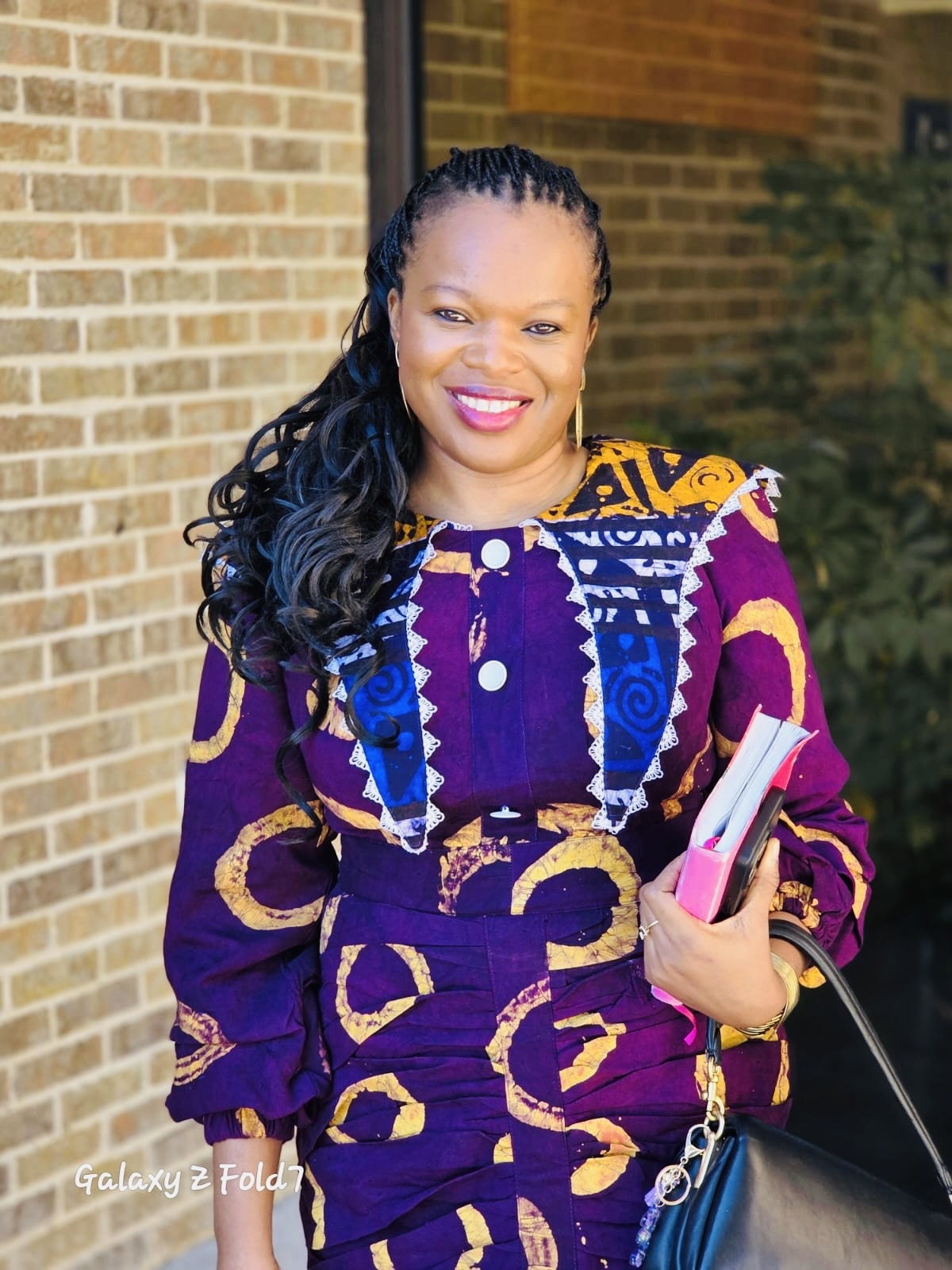
Mom, Founder
Nnenna Ajagunna is a trained lawyer. She is a policy expert, and a long-time advocate for community-based development. She has served in trustee and operational roles within NGOs and volunteers extensively with organizations supporting marginalized communities in Nigeria and the United States. Her experience in governance, risk, and social impact underpins Òrentéh’s commitment to accountable, locally grounded menstrual health delivery.


